Underground power-line alternatives
Click a heading below to read the information and related documents.
Underground High-Voltage Direct Current Is An Alternative to Overhead HVAC Transmission Lines
Sign the Petition For An Underground HVDC Solution Through Virginia
References:
High Voltage Direct Current (HVDC) transmission lines use direct current as opposed to the alternating current which is used by the HVAC transmission lines. HVDC is used for bulk transfer of electricity across long distances and for direct point to point applications. Recently, it has begun to be used for shorter distances. HVDC voltages are in the 100kV to 800 kV range.
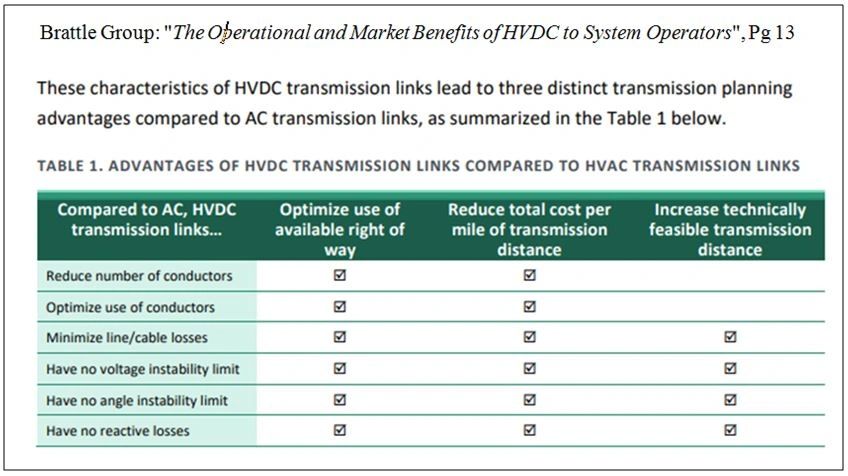
In comparison to HVAC, HVDC is more efficient and has 30 – 50% less line losses over long distances than HVAC. HVDC transmission lines do not require substations like HVAC transmission systems do, instead an HVDC converter substation is needed at each end of the transmission line. An added benefit is that HVDC lines do not emit EMFs.
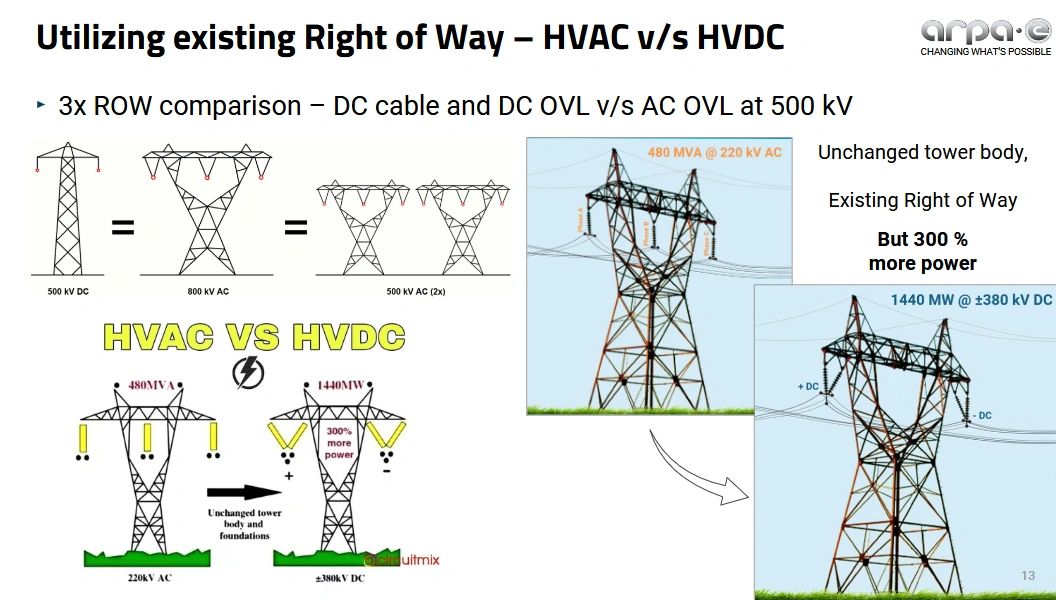
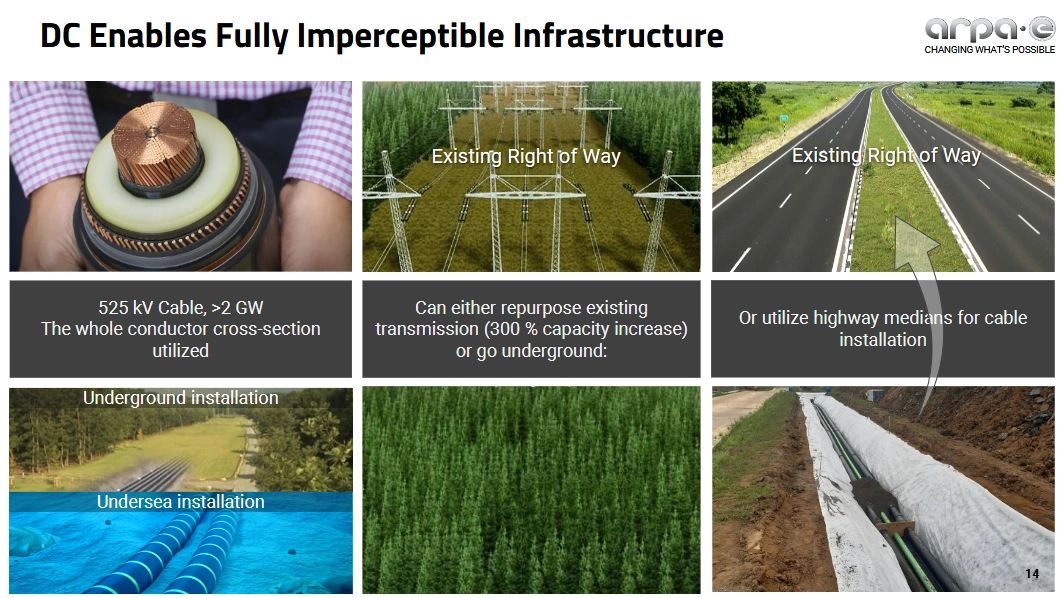
In a typical overhead transmission line installation, HVDC uses a narrower right of way and smaller towers. Additionally HVDC cable can be more easily buried than HVAC and can be installed under water.
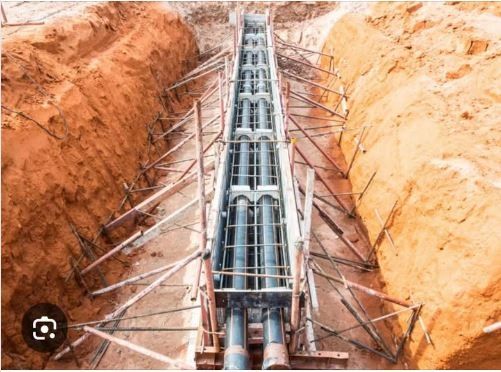
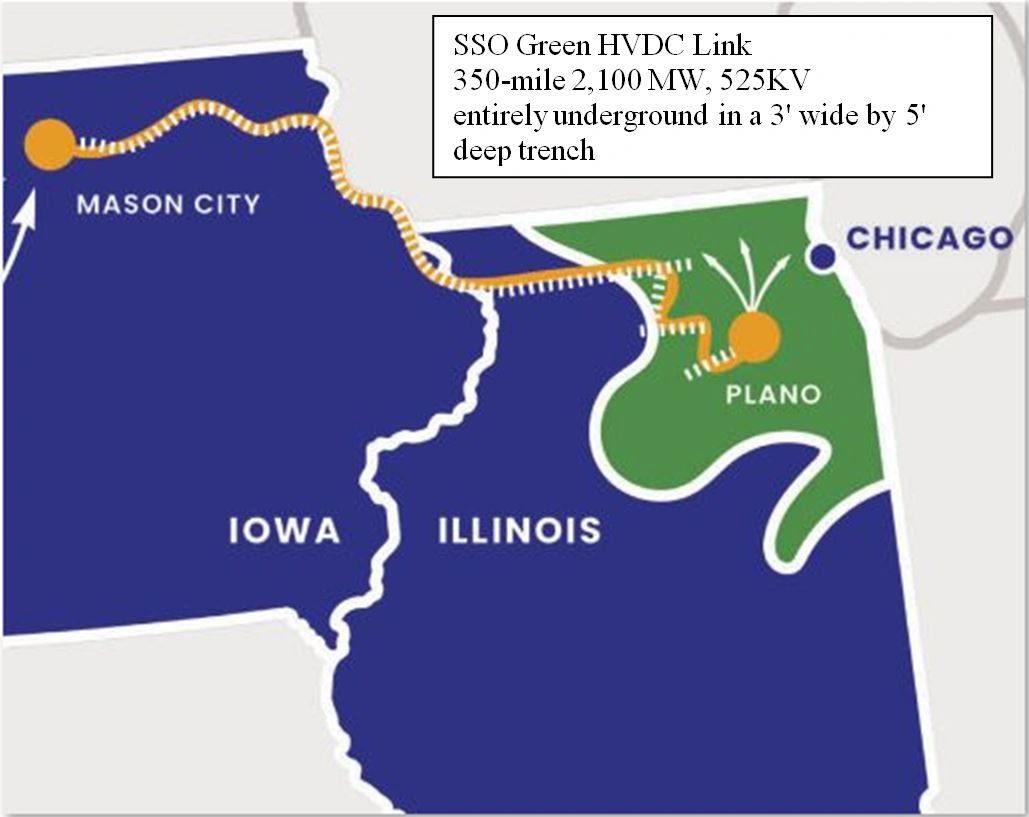
The trench for the SSO Green HVDC Link (350-mile 2,100 MW, 525KV underground high voltage direct current (HVDC) ) is 3′ wide by 5′ deep.
When comparing costs between HVDC and HVAC a 2022 feasibility study done by NextGen Highways found that buried HVDC is cost competitive to HVAC. The DOE notes that ” converter stations required for HVDC deployment are expensive, however, with a breakeven distance of approximately 37 miles for submarine lines and 124 miles for overhead lines ”
The Brattle Group’s 2023 report “The Operational and Market Benefits of HVDC To System Operators“: “European grid operators in particular have taken advantage of advanced VSC capabilities. Internationally, VSC-based HVDC technology has become the dominant HVDC choice over the last 5–10 years, with approximately 50 GW of VSC-based HVDC transmission projects in operation today and approximately 130 GW planned or under development through the end of the decade. North America accounts for only 3% of all VSC-based HVDC systems in operation worldwide and—almost exclusively due to efforts by merchant transmission developers—for approximately 30% of planned and proposed VSC systems.”
In this report they list over 20 case studies.
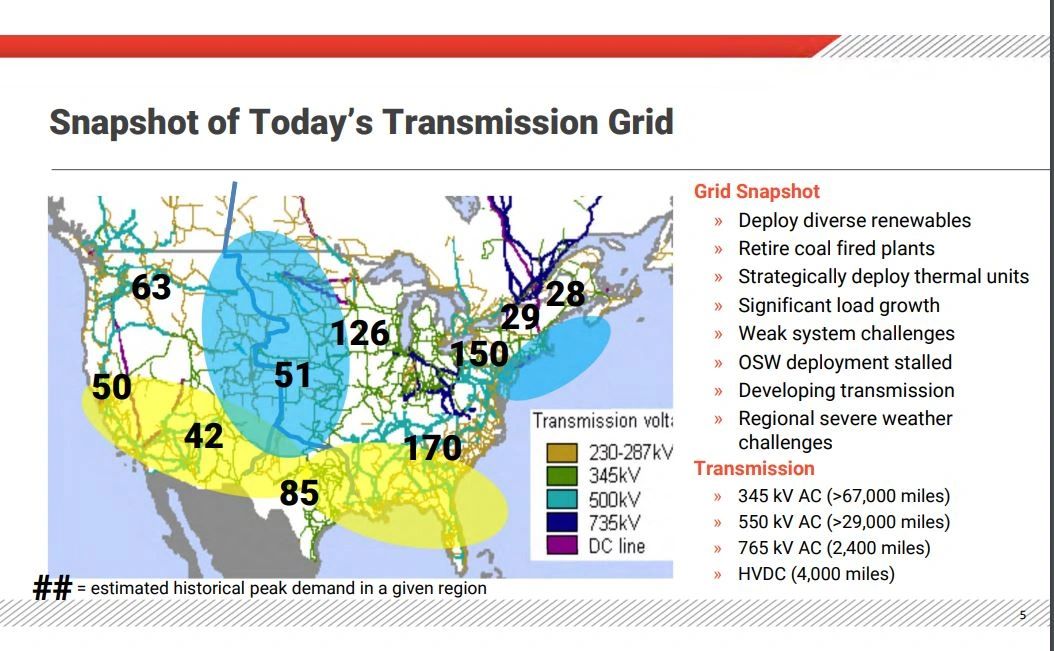
The U.S Department Of Energy even has an HVDC Cost Reduction (CORE) Initiative and is promoting the use of HVDC to connect the county. The Department of energy states “Ultimately, HVDC technology has many benefits for the American grid as it is cost-effective over long distances. Converter stations required for HVDC deployment are expensive, however, with a breakeven distance of approximately 37 miles for submarine lines and 124 miles for overhead lines, HVDC systems offer cost savings that outweigh these high converter costs. These savings include relatively low loss rates and cheaper construction costs. Over long distances, HVDC losses can be up to 30-50% lower than comparable HVAC systems, reducing long-term costs. “
Black & Veatch did a study for the PATH 765kV transmission line, that proved HVDC underground was a feasible solution. The full title of that study was : Black & Veatch, “PJM Interconnection Potomac-Appalachian Transmission Highline (PATH) Project, HVDC Conceptual Study, B&V Project No.164996, B&V File 42.2004 , FINAL November 17, 2009 This was entered into the record as part of the Virginia SCC Case PUE 2009-00043 Application of PATH Allegheny Virginia Transmission Corporation
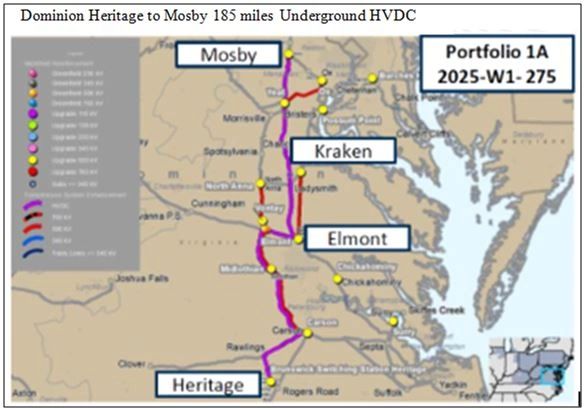
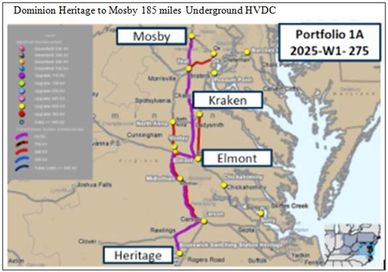
PJM Recent selected Dominion’s 200 mile all underground HVDC project from the Heritage substation in Southern Virginia to the Mosby Substation in Loudoun County (aka Dominion’s Commonwealth Energy Express) . Here is Dominion’s HVDC fact sheet, on page 2 read why it is easier to bury HVDC than HVAC.
Read PJM’s HVDC fact sheet. Even PJM acknowledges “Still, as a solution for interregional, long-range transmission, HVDC systems have evolved to deliver cost and design advantages over AC high voltage transmission. Uses range from undersea cables to deliver bulk electricity from offshore wind to the coast, or overland HVDC systems to transport renewable solar and wind power located in unpopulated areas to urban areas. HVDC technology can also connect regional grids that operate at different frequencies. There are more than 100 HVDC transmission projects around the world, including lines stretching more than 6,000 miles from northwest China to the coast. In North America, there are several thousand miles of HVDC in operation, according to the U.S. Dept. of Energy. Between PJM and the New York ISO, several HVDC projects provide service.”
FirstEnergy is now responsible for two massive transmission lines targeted through our communities (Valley Link and MARL/Gore-Doubs-Goose Creek). Its time to re-evaluate and look at ONE single solution – figure out how much power can be reasonably imported from West Virginia and build A SINGLE INCLUSIVE HVDC Underground solution to solve it.
References:
- DOE Super Electronic Highway Grid Presentation: Modernizing the Grid / HVDC and MTDC
- Electric Technology: Difference between HVAC and HVDC
- Detailed Differences Between HVAC and HVDC
- 2024: Federation Of American Scientists : Creating a National HVDC Network
- 2024: DOE HVDC Cost Reduction (CORE) Initiative
- 2023: DOE Connecting the Country with HVDC
- 2023: The Operational and Market Benefits of HVDC to System Operators.
- 2022: NextGen Highways Feasibility Study for Minnesota Department Of Transportation
- 2022: NextGen Highways Buried HVDC is Cost Competitive
- 2014: ABB Review: Special Report 60 years of HVDC
Workshops:
- Read materials from the December 16, 2025 MISO HVDC Assessment Workshop
- Read materials from the June 23, 2023 ERCOT EHV and HVDC Workshop
Articles:
- Why are utilities building tomorrow’s grid with yesterday’s technology?
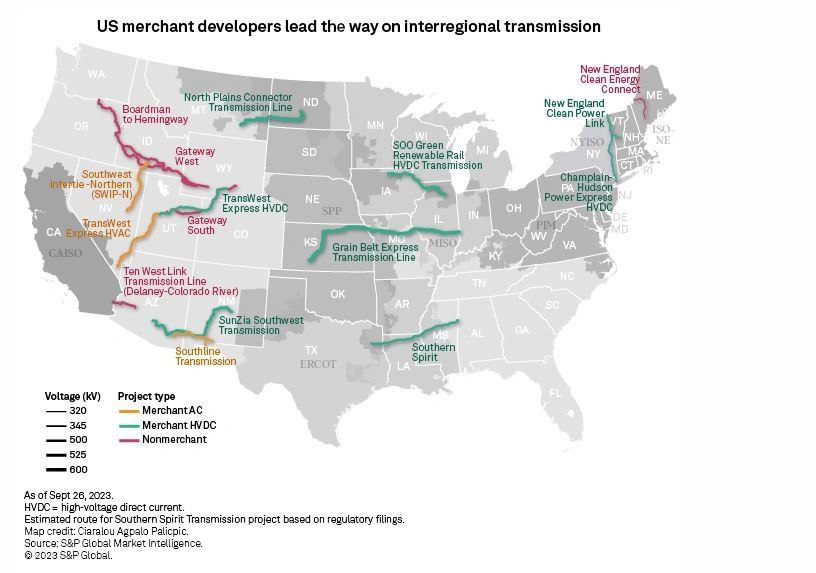
- Merchant Developers fill “void” in US Inter-regional Grid Build-out
- Creating a National HVDC Transmission Network
- Harnessing HVDC transmission as a transformative force in modern grid design
- Undergrounding: Case Study: Undergrounding to Support Data Center Demand Growth
- Connecting the Country with HVDC
- Cyber Attack Resilient HVDC
- Siemens Energy: HVDC Solutions
- Super Electric Highway Grid Presentation: Modernizing the Grid / Multi – Terminal HVDC
- The HVDC Center: Multi-Terminal HVDC Webinar Series Part1 – Introduction to Multi-terminal HVDC
- IEEE Spectum: HVDC Networks Come To Europe
- Converting existing HVAC transmission corridors to HVDC is an overlooked option for increasing capacity
Virginia Studies and Proposals
HVDC_Underground_ProjectDetails (pdf)Download
Two page handout on underground HVDC listing the latest underground HVDC transmission lines in the US that are in progress or have been completed,
HVDC_Underground_ProjectDetails (pdf)Download
US HVDC Transmission Lines In Progress / Completed
Dominion Heritage To Mosby HVDC Backbone (aka the Commonwealth Energy Express)
- PJM Approved, Estimated Completion Date June 2032 (Project Site)
- From the Heritage substation in Brunswick County, Virginia to the Mosby substation in Loudoun County, Virginia to serve Data Center Alley.
- 525kV, Total transmission capacity of 6,000 MW, with 3,000 MW to be implemented in Phase 1, and an additional 3,000 MW for Phase 2
- HVDC XLPE Cables
- 185 Miles
- $4.8 billion This is a PJM Ratepayer funded project.
- “The project is expected to primarily follow existing rights-of-way, limiting the need for property acquisitions.”
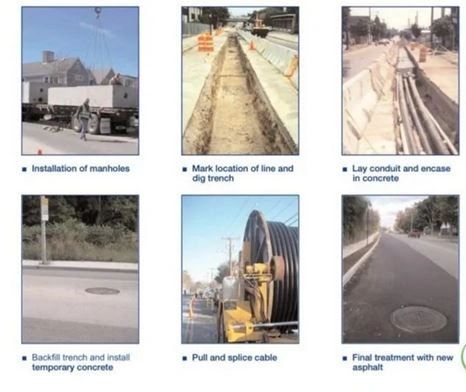
- “The physical footprint of the duct banks is assumed to be 8 feet wide. For typical operations and maintenance practice, 15-ft is added to each side of the duct banks. The total permanent new Right-of-Way necessary for the underground cable system would be 40-ft. For trench-less crossings, 150ft of ROW is needed for Horizontal Directional Drilling and 50ft of ROW is needed for Jack and Bore. At locations where splice vaults are required, the ROW will need to expand to 40-ft to accommodate the larger footprint of the system.”
- each of the two required High Voltage Direct Current converter stations (built at the Heritage and Mosby substation ends) is estimated to require a land footprint of approximately 12 acres
Read Dominion Eyes Underground, Direct Current Transmission Line Ending in Loudoun
Read the details in the redacted proposal
SSO Green HVDC Link
- In Progress – Estimated Completion Date 2031 (Project Overview)
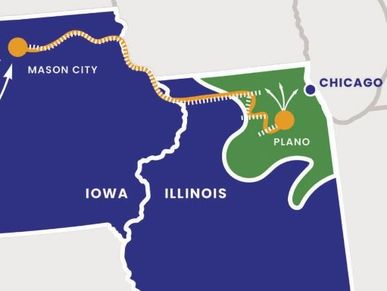
- Mason City, Iowa to Yorkville, Illinois , Connecting MISO in the Midwest, and PJM in the East.
- 2,100 MW, 525KV
- HVDC XLPE Cables
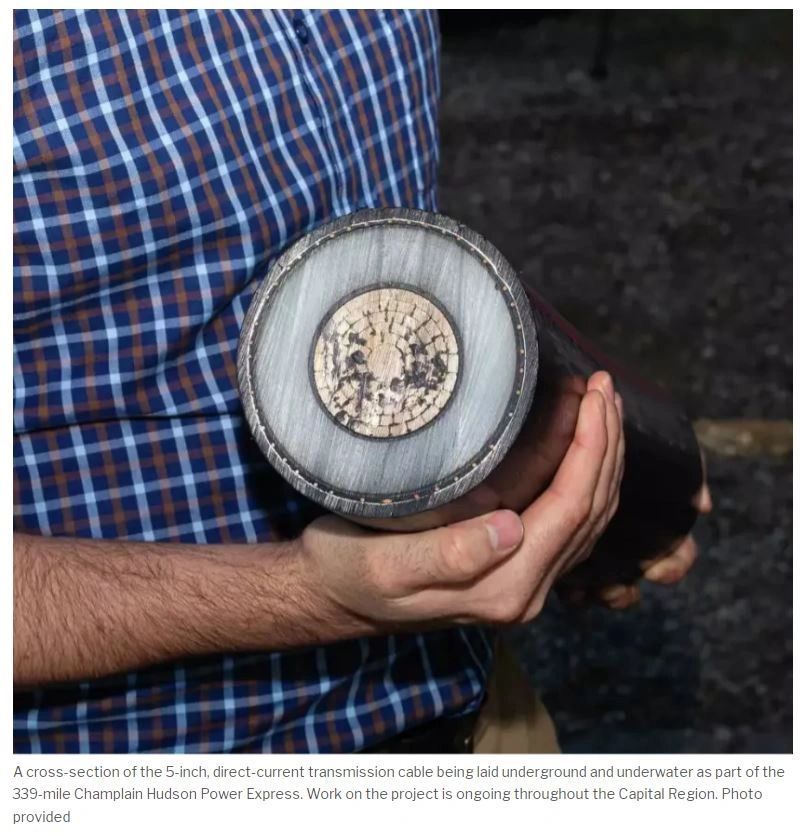
- “The project will use two 5-inch diameters (about the size of a wine bottle), 525KV extruded cross-link polyethylene (XLPE) insulated cables installed in a 3-foot wide by 5-foot deep trench. SOO Green HVDC Link will construct two VSC power converter stations at either end of the 350-mile HVDC line.”
- 350 miles
- All underground with transmission line running along existing rail corridors from Iowa to Illinois
This is a privately funded project.
Read 2.1-GW SOO Green transmission project advances with Iowa agreement
View video on the construction techniques being used here
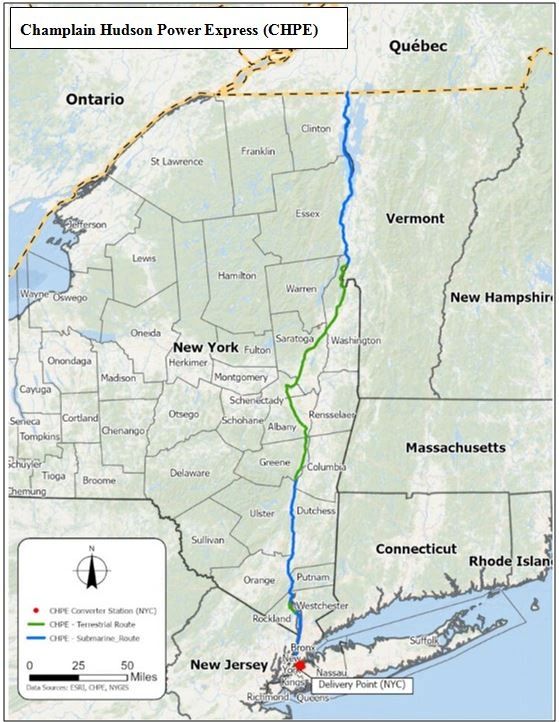
Champlain Hudson Power Express
- November, 2022 – Completed May 13, 2026 (Project Overview)
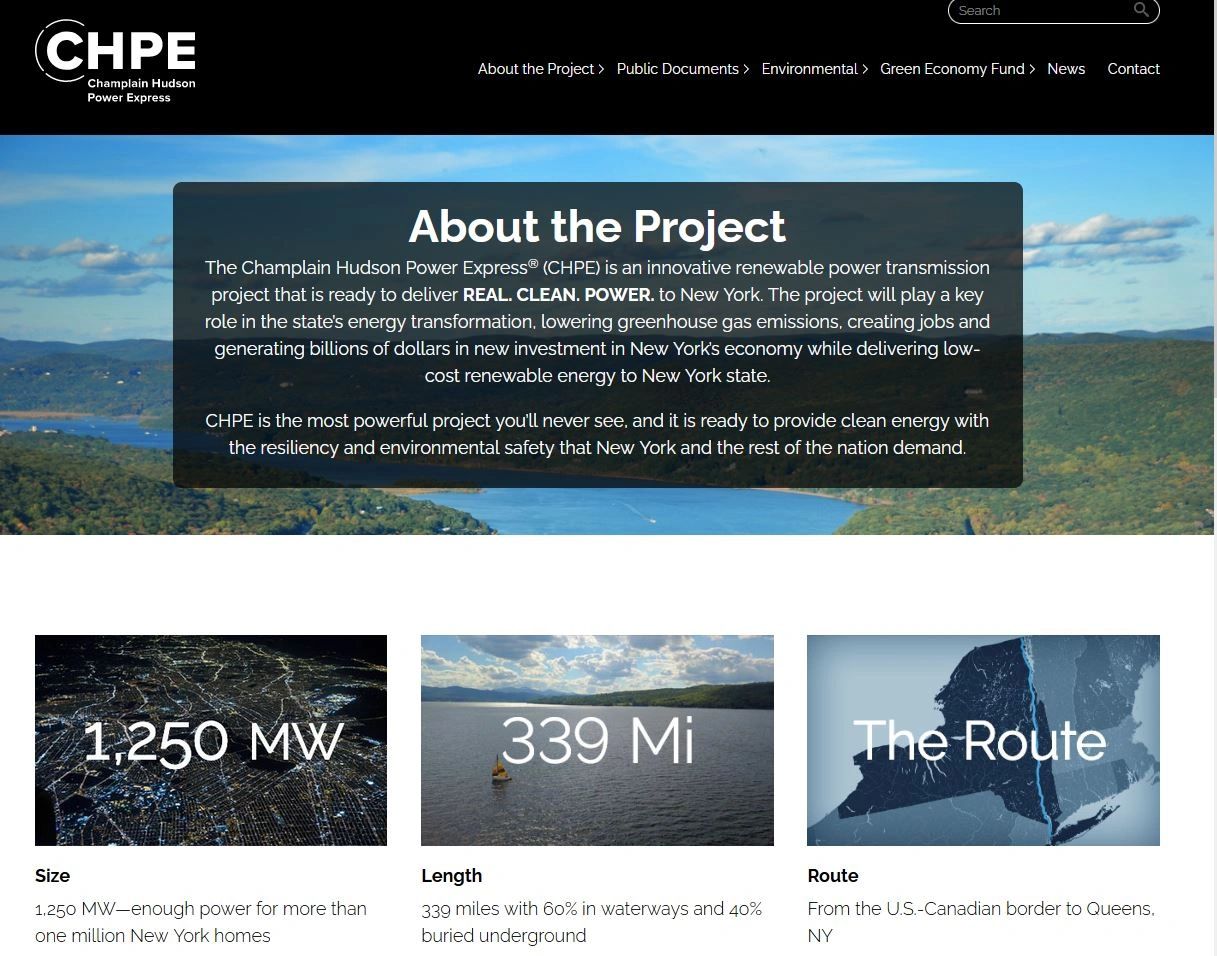
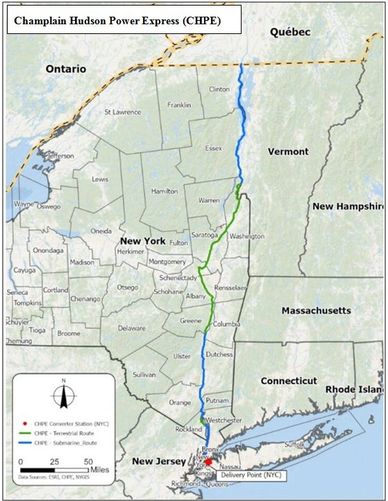
- Canadian Border to Queens, New York
- 1,250 MW – enough power for more than 1 million homes
- HVDC cable
- 339 miles with 60% in waterways and 40% buried underground
- The main conversion facility in Astoria, Queens occupies a total site area of approximately 4.5 acres. The primary high-voltage direct current (HVDC) converter building measures roughly 165 feet by 325 feet (a footprint of about 1.2 acres) and stands about 70 feet tall.
- “This project is entirely privately funded, and the overall cost is approximately $6 billion” (CHPE Q&A)
- “ The reason for the unusual approach of a submerged and buried line is that it reduces the local opposition that always accompanies large transmission line construction projects. “
Watch the webinar on under water installation (Expand & Click Marine Installation and Studies)
Read more about North America’s Longest Underground Transmission Line
Read the Adirondack Explorer article on the construction progress here
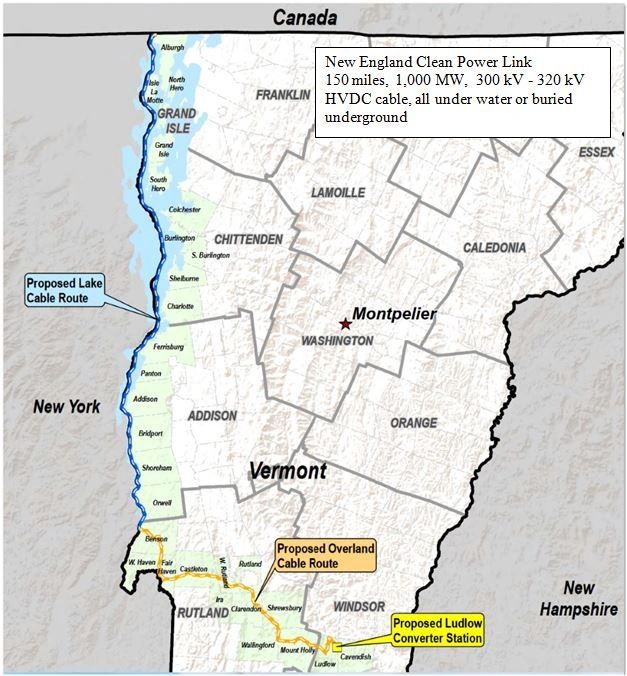
New England Clean Power Link
- Construction began in 2021 – Completed January 16, 2026 (Project Overview)
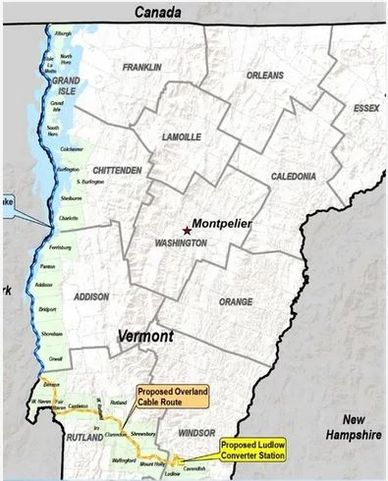
- Canadian border to Vermont
- 1,000 MW
- 300 kV – 320 kV HVDC cable
- 150 miles, all under water or buried underground in existing rights-of-way
- $1.6 billion merchant line will be privately financed and will not use taxpayer dollars
- “Ensured the permanent conservation of 50,000 acres of Maine wilderness, creating one of the largest contiguous conservation areas in the region. This land preservation initiative safeguards critical wildlife habitats, protects biodiversity, and ensures sustainable forestry practices.”
Press Release: Avangrid’s New England Clean Energy Connect Project Is Complete and Energized
DOE New England Clean Power Project Summary
ISO New England Consumer Liaison Group Presentation
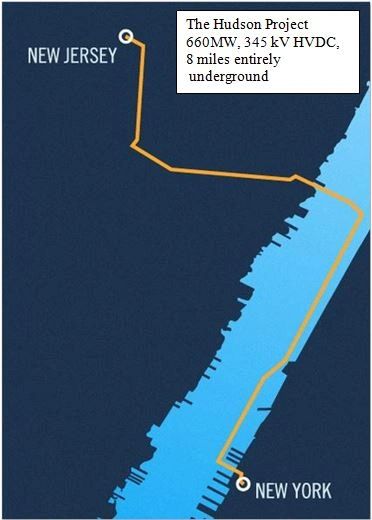
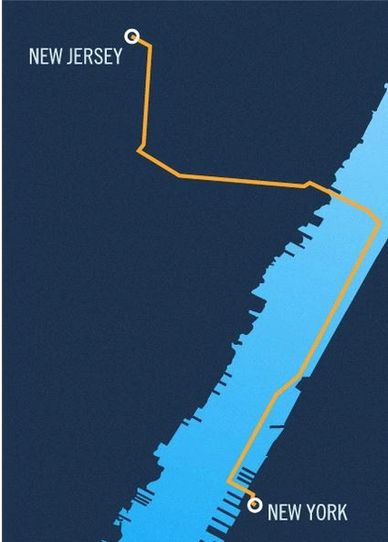
The Hudson Project
- May 2011 – Completed June 2013 (Project Overview)
- New Jersey , Long Island New York
- 660 MW – enough power for about 600,00 homes
- 345 kV HVDC cable
- 7.5 miles, entirely underground & underwater. It follows existing railroad rights-of-way, through an inactive railroad tunnel to the edge of the Hudson River in Edgewater. It is then buried beneath the Hudson for approximately three-and-a-half miles
- $850 Million
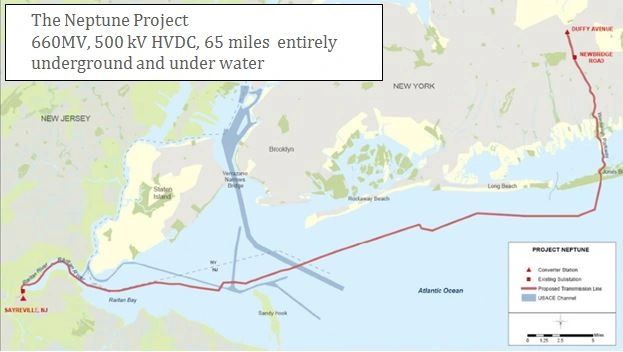
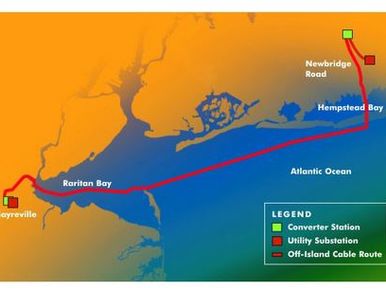
Neptune Transmission
- June 2005 – Completed June 2007 (Project Overview)
- New Jersey To Long Island, New York
- 660 MW, enough power for about 600,000 homes
- 500 kV HVDC cable
- 65 miles, @15 miles buried underground &@60 miles underwater
- $650 Million, This project was privately funded. (Neptune Project In Operation)
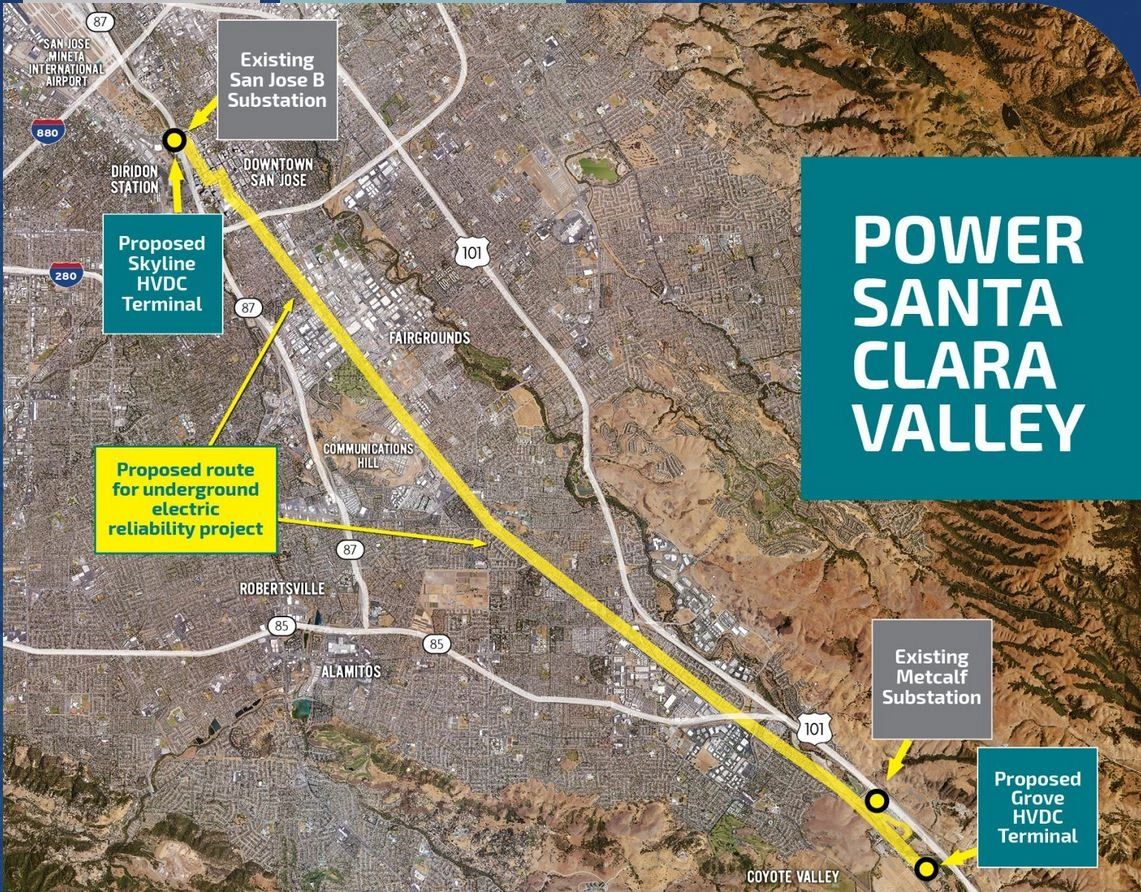
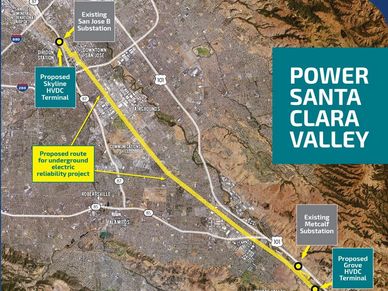
Power Santa Clara Project
- Construction started May 2026 with a completion date in 2028 (Project Overview)
- California
- 500 kV and 320 kV HVDC cables
- 1 mile 500 kV buried underground and 13 miles 320 kV buried underground
- $450 Million
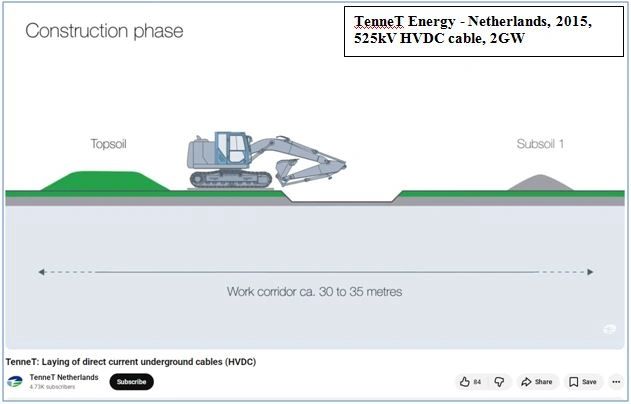
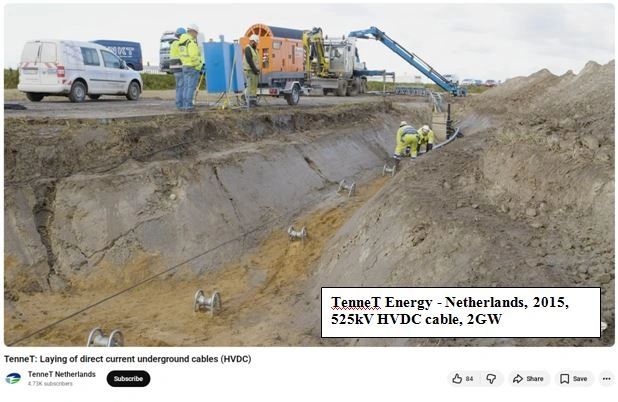
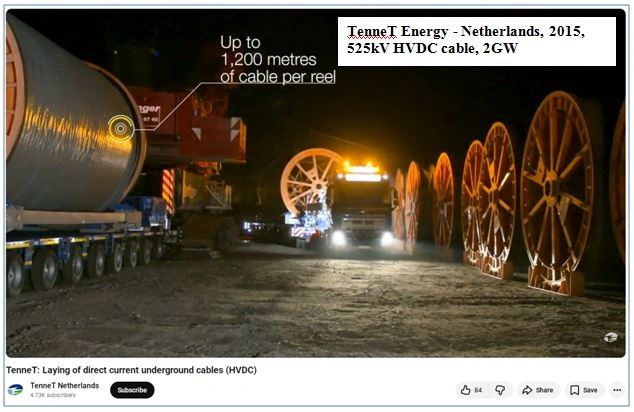
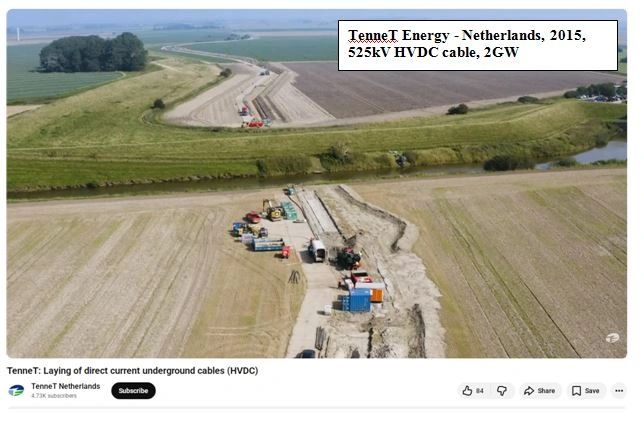
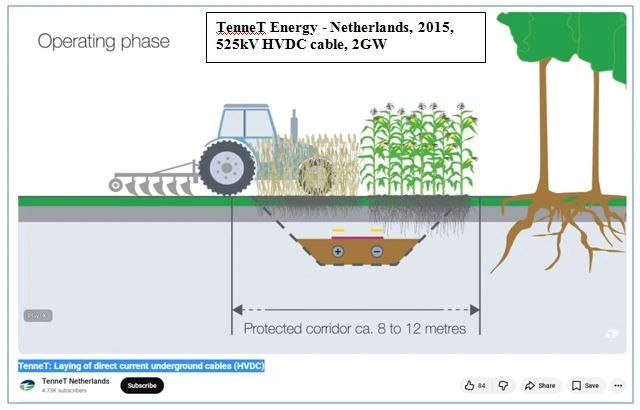
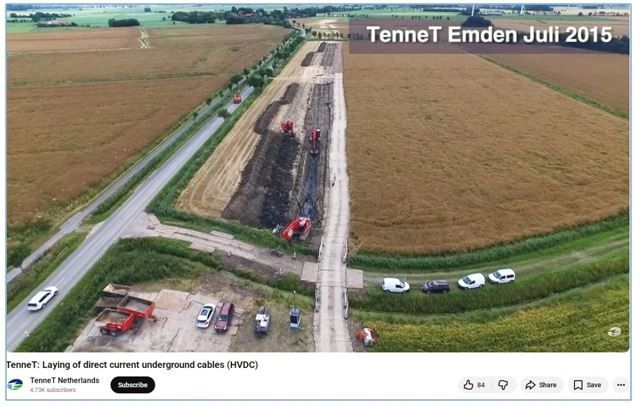
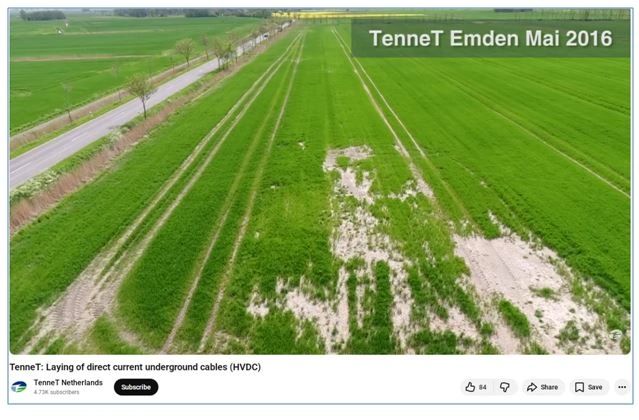
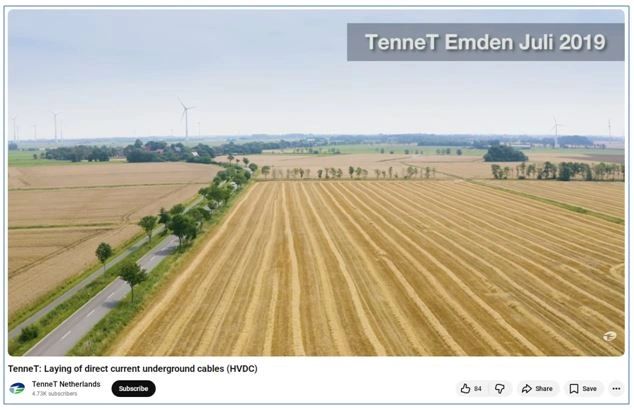
Netherlands: TenneT Energy Laying of direct current underground cables (HVDC)
TenneT energy has several thousand meters of underground and underwater HVDC cables in Germany and the Netherlands. This video is of the installation of two underground HVDC cables of 525kV for a capacity of 2GW , enough to power 5 million homes. This project was done in 2015.
2023 Fall Technical Workshop: Tutorial: HVDC Transmission
Moderator: James Okullo, Director of System Planning, ESIG
Agenda:
- Overview of HVDC Technology, its Capabilities, Use Cases, Operational and Markets Benefits, Misconceptions, Technology and Supply Chain Barriers Johannes Pfeifenberger, Principal, The Brattle Group Chandra Mohan Sonnathi, Lead HVDC Specialist, DNV
- HVDC Fundamentals and State-of-the-Art: A Vendor Perspective Eugen Starschich, Lead Engineer HVDC, Siemens Energy
- HVDC Transmission Case Study Henry Abrams, Manager, Renewable Electrical Engineering, Invenergy
- Power from the Prairie Project Economic Assessment Jinxiang Zhu, Consulting Director, Hitachi Energy
2025 11/04 PJM TEAC - Dominion 185 Mile ALL Underground HVDC
2025 11/04 PJM TEAC – Dominion 185 Mile ALL Underground HVDC
- Right-of-way width by segment: Existing Dominion ROW to be used for this project. A permanent easement, or Right-of-Way (ROW), is required for each duct bank post installation for operation and maintenance. This easement will primarily be used to limit vegetation, prevent external parties from digging into the duct bank, and to maintain or repair the lines. The physical footprint of the duct banks is assumed to be 8 feet wide. For typical operations and maintenance practice, 15-ft is added to each side of the duct banks. The total permanent new Right-of-Way necessary for the underground cable system would be 40-ft. For trench-less crossings, 150ft of ROW is needed for Horizontal Directional Drilling and 50ft of ROW is needed for Jack and Bore. At locations where splice vaults are required, the ROW will need to expand to 40-ft to accommodate the larger footprint of the system.
- PJM selected/approved this project in January of 2026 and rejected the 765kV alternatives even though the 765kV proposals were less expensive
- Project: Construct a new bipolar ±525kV HVDC transmission link between the Heritage and Mosby Substations. This HVDC link will have a total transmission capacity of 6,000 MW, with 3,000 MW to be implemented in Phase 1, and an additional 3,000 MW planned for Phase 2. Construct two converter stations, one at each substation (Heritage and Mosby), each with a capacity of 3,000 MW. Install a bipolar HVDC transmission line, approximately 185 miles in length, fully routed underground between the two substations.
- Project in-service date: 06/2032
- Terrain: 185 miles through the Piedmont region. The counties include Greensville, Dinwiddie, Chesterfield, Powhatan, Goochland, Hanover, Caroline, Spotsylvania, Stafford, Fauquier, Prince William, and Loudoun Counties. The areas range from rural, suburban to densely urban. There would be civil infrastructure, wetland and stream crossings to navigate.
- Right-of-way width by segment: Existing Dominion ROW to be used for this project. A permanent easement, or Right-of-Way (ROW), is required for each duct bank post installation for operation and maintenance. This easement will primarily be used to limit vegetation, prevent external parties from digging into the duct bank, and to maintain or repair the lines. The physical footprint of the duct banks is assumed to be 8 feet wide. For typical operations and maintenance practice, 15-ft is added to each side of the duct banks. The total permanent new Right-of-Way necessary for the underground cable system would be 40-ft. For trenchless crossings, 150ft of ROW is needed for Horizontal Directional Drilling and 50ft of ROW is needed for Jack and Bore. At locations where splice vaults are required, the ROW will need to expand to 40-ft to accommodate the larger footprint of the system.
- Each of the two required High Voltage Direct Current converter stations (built at the Heritage and Mosby substation ends) is estimated to require a land footprint of approximately 12 acres
Answers to HVDC Questions
Dominion Letter on the Merits of HVDC
LC BOS Letter to PJM Supporting Heritage to Mosby
Loudoun County Resolution Supporting the Heritage to Mosby Underground HVDC transmission line.
LC BOS Letter to PJM Supporting Heritage to Mosby
2009 10/22 PJM TEAC PATH HVDC Study
- The 765kV PATH line proposed in 2009 was to cross the same area PJM has proposed to locate MARL/Gore-Doubs-GooseCreek (500kV) and Valley Link North (765kV)
- Black & Veatch did a study for the PATH 765kV transmission line that proved underground HVDC was feasible
- The full title of that study was : Black & Veatch, “PJM Interconnection Potomac-Appalachian Transmission Highline (PATH) Project, HVDC Conceptual Study, B&V Project No.164996, B&V File 42.2004 , FINAL November 17, 2009. This was entered into the record as part of the Virginia SCC Case PUE 2009-00043 Application of PATH Allegheny Virginia Transmission Corporation.
- See Concept 2 – underground HVDC in the charts below
HVDC Feasibility Studies and Papers
2022 NextGen Highways Feasibility Study for Minnesota Department Of Transportation (pdf)
Download2022 NextGen Highways Buried HVDC Is Cost Competitive (pdf)
Download2014 ABB Review: Special Report 60 years of HVDC (pdf)
Download2023 Brattle Group: The Operational and Market Benefits of HVDC to System Operators (pdf)
Download